

Tel: +86 151 9566 5312
ADD: No. 588, Datong Road, Wuyi Town, Nanqiao District, Chuzhou City, Anhui Province, China.
Plastic running tracks are widely installed in schools, sports stadiums and public recreation facilities across the globe. At present, polyurethane, recycled rubber and EPDM are the dominant raw‑material options for athletic surfaces. While low‑cost recycled rubber has long occupied a large market share, safety‑related concerns over toxic‑adhesive risks have pushed manufacturers to search for safer, eco‑friendly alternatives.
Thermoplastic Elastomer (TPE) has emerged as one of the most competitive new‑generation materials and is expected to become a mainstream choice for runway construction in the coming years.
Our customized TPE compound is environmentally‑safe, free of harmful substances, and delivers rubber‑like high resilience. Its environmental‑protection indicators outperform many conventional runway materials, creating a secure sports surface for students and athletes.
Economical‑grade TPE offers attractive pricing, making it a viable substitute for recycled rubber for budget‑friendly track projects. It helps track manufacturers strike a good balance between product safety and production costs.
Thanks to its excellent thermoplastic processability, finished TPE track parts can be produced by injection molding. This manufacturing method greatly cuts down the consumption of high‑toxic solvent‑based adhesives during installation.
With decades‑long accumulated production experience, we are able to formulate outdoor‑specialized TPE grades with enhanced UV‑resistance, anti‑aging and weather‑resistant properties, which are critical for long‑term outdoor runway service.
As safety standards for sports facilities keep getting stricter worldwide, eco‑friendly TPE raw‑materials will gradually unlock huge market potential in the athletic‑track sector.
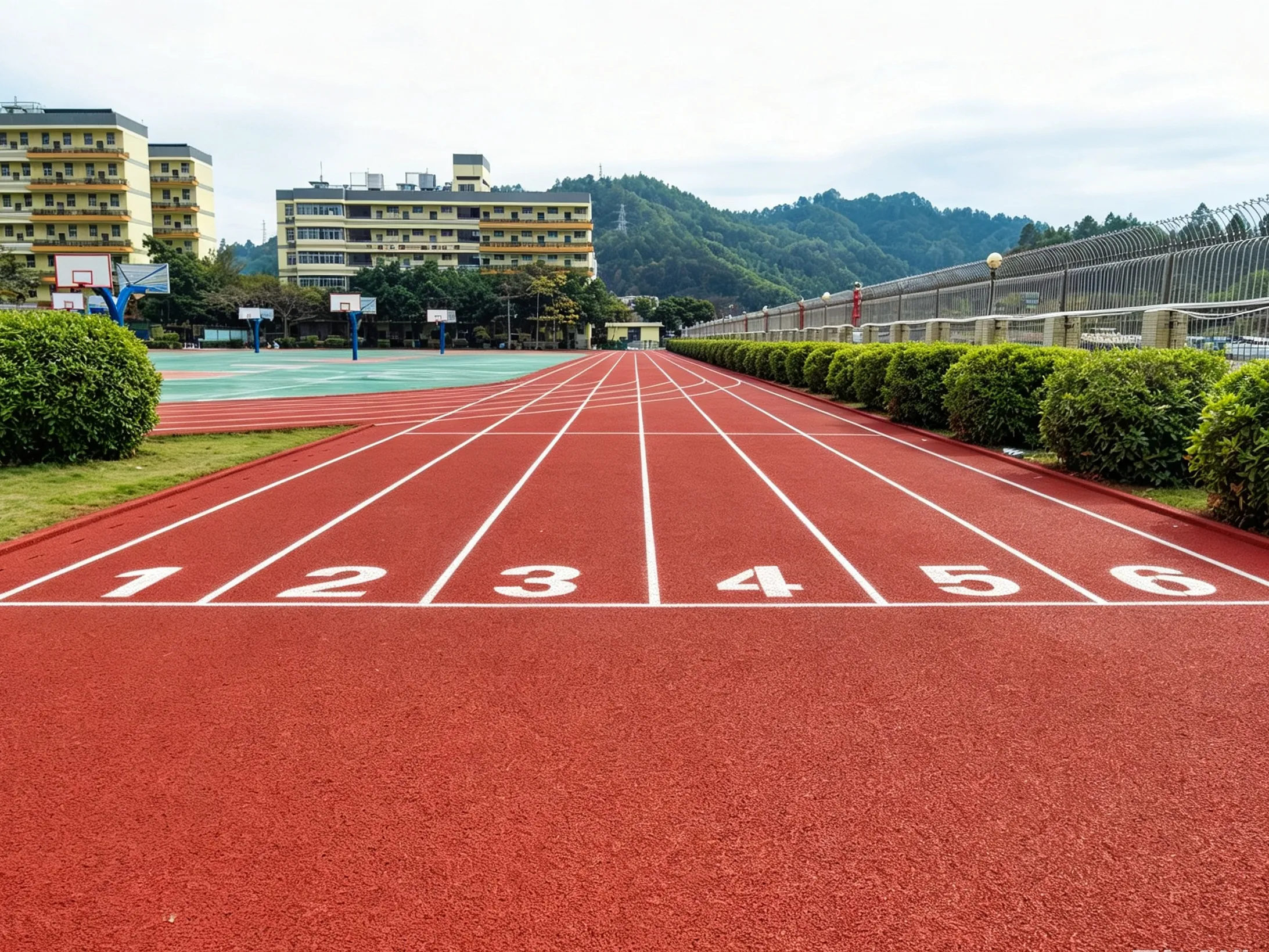
Plastic running tracks are widely installed in schools, sports stadiums and public recreation facilities across the globe. At present, polyurethane, recycled rubber and EPDM are the dominant raw‑material options for athletic surfaces. While low‑cost recycled rubber has long occupied a large market share, safety‑related concerns over toxic‑adhesive risks have pushed manufacturers to search for safer, eco‑friendly alternatives.
Thermoplastic Elastomer (TPE) has emerged as one of the most competitive new‑generation materials and is expected to become a mainstream choice for runway construction in the coming years.
Our customized TPE compound is environmentally‑safe, free of harmful substances, and delivers rubber‑like high resilience. Its environmental‑protection indicators outperform many conventional runway materials, creating a secure sports surface for students and athletes.
Economical‑grade TPE offers attractive pricing, making it a viable substitute for recycled rubber for budget‑friendly track projects. It helps track manufacturers strike a good balance between product safety and production costs.
Thanks to its excellent thermoplastic processability, finished TPE track parts can be produced by injection molding. This manufacturing method greatly cuts down the consumption of high‑toxic solvent‑based adhesives during installation.
With decades‑long accumulated production experience, we are able to formulate outdoor‑specialized TPE grades with enhanced UV‑resistance, anti‑aging and weather‑resistant properties, which are critical for long‑term outdoor runway service.
As safety standards for sports facilities keep getting stricter worldwide, eco‑friendly TPE raw‑materials will gradually unlock huge market potential in the athletic‑track sector.

Tel: +86 151 9566 5312
ADD: No. 588, Datong Road, Wuyi Town, Nanqiao District, Chuzhou City, Anhui Province, China.